
Solar Cables UV-Resistant Cross-Linked Wiring & Certified Connectors
Solar DC cables and genuine MC4 connectors form the nervous system of your photovoltaic installation, carrying direct current from rooftop panels to inverters with ultra-low voltage drop and 25+ year outdoor weather resistance.
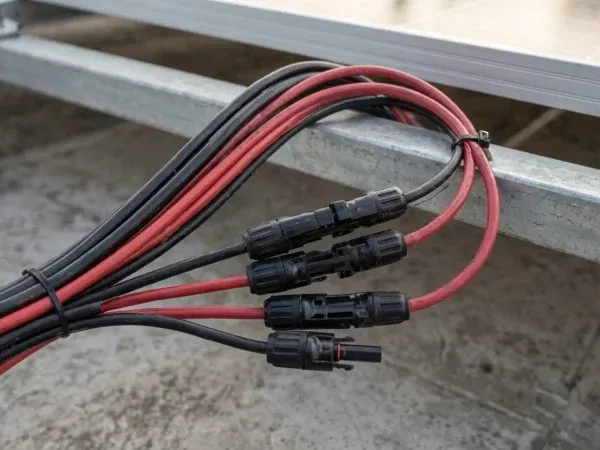
Solar Cabling Infrastructure Overview
| Cable Type | Where It's Used | Conductor & Insulation | Key Standards |
|---|---|---|---|
| Solar DC Cable (4 / 6 sq.mm) | Between solar panels, array strings and inverter DC input | Tinned Electrolytic Copper, Cross-Linked XLPO | EN 50618 (1500V DC rated, UV & Ozone proof) |
| AC Power Armoured Cable | From inverter AC output to ACDB, Main DB and Net Meter | Copper/Aluminium Multi-Core with Steel Armour | IS 1554 / IS 7098 (1.1 kV AC rated) |
| Dedicated Earth Cable | Structure bonding, inverter casing, surge earth pits | High-conductivity Green/Yellow PVC insulated Copper | IS 3043 (Earthing safety code) |
Why Premium Solar Cabling Matters
1. 100% UV & Weather Resistance
TUV-certified XLPO insulation will not crack, harden, or leak current even after 25 years of relentless exposure to Assam's extreme sun and humidity.
2. Low Resistance & Ultra-Low Voltage Drop
Proper cable cross-section sizing keeps transmission loss under 1.5%, guaranteeing you get every kilowatt-hour your solar panels generate.
3. Waterproof IP68 Genuine MC4 Connectors
Factory-crimped MC4 connectors with internal silicone O-rings seal out monsoonal water, completely preventing dangerous arcing and hot spots.
4. Rigid UV-Rated Conduit Enclosure
Every cable runs inside neatly clamped rigid PVC conduits and metal saddles, shielding the wire from rodents, monkeys, and physical abrasion.
Engineered Electrical Safety
Solar cables connect directly to our certified ACDB & DCDB Distribution Boxes and high-efficiency Solar Inverters. Explore our complete step-by-step wiring standard in the Rooftop Solar Installation Guide or consult our technical team via the contact page.
Related pages
FAQ
Common questions
Why can't I use ordinary household electrical wire for solar panel DC strings?
Ordinary PVC electrical wire is not UV-stabilized, not rated for 1000V–1500V DC, and deteriorates rapidly under direct sunlight and rain, causing insulation cracking, ground faults, and fire hazards.
What size solar cable is standard for residential rooftop systems in Assam?
Standard residential installations up to 5 kW–10 kW use 4 sq.mm or 6 sq.mm tinned copper solar DC cable, maintaining voltage drop below 1.5% from roof to inverter.
What are MC4 connectors and why are genuine IP68 connectors critical?
MC4 connectors are specialized locking, waterproof male/female plugs used to link solar panels together. Cheap counterfeit connectors create high-resistance hot spots that melt and cause system failures.
How does Sewaro Energy route and protect solar cables on roofs?
We enclose all outdoor solar cables inside UV-stabilized heavy-duty rigid PVC/HDPE conduits or metal cable trays secured with SS304 cable ties, preventing sagging and rodent damage.
Ask about solar cabling & connectors
Share a few details and our team will help you size the right system. No obligation.
Sewaro Energy service information
Tell us about your roof and electricity use. We'll recommend the right system and handle subsidy and net-metering paperwork where applicable.
Ready to power your home with solar? engineered to last.
Tell us about your roof and your electricity bill. We'll help you size the right system and handle the subsidy and net-metering paperwork.