
Solar Batteries Store Clean Solar Energy for Night & Outages
Solar energy storage batteries store surplus power generated during sunny daylight hours, supplying uninterrupted electricity for your home or commercial loads during evening hours and grid blackouts.
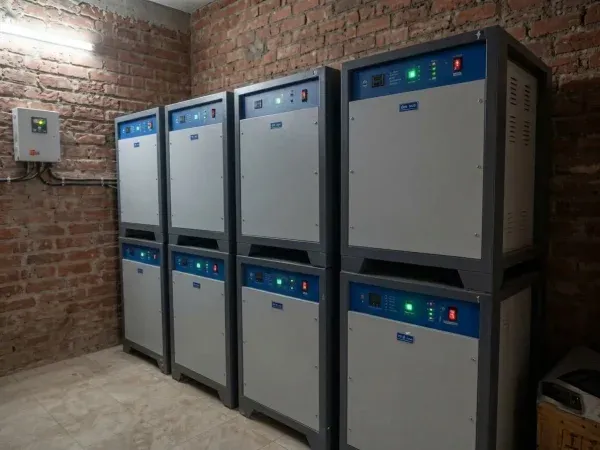
Battery Technologies Compared
| Battery Chemistry | Cycle Life (Lifespan) | Depth of Discharge | Maintenance | Ideal Use |
|---|---|---|---|---|
| Lithium LiFePO4 | 4,000–6,000 cycles (10–15 yrs) | 90% – 95% DoD | Zero maintenance, wall-mount | Modern hybrid homes, villas & critical commercial power |
| Tall Tubular Lead-Acid | 1,200–1,500 cycles (3–5 yrs) | 50% max DoD | Periodic distilled water top-up | Budget entry-level off-grid installations |
Key Factors for Solar Battery Selection
1. Usable Energy vs Nominal Capacity
A 5 kWh Lithium battery allows 4.5 kWh of real usable electricity (90% DoD), whereas a 5 kWh lead-acid battery only safely yields 2.5 kWh (50% DoD).
2. Smart Battery Management System (BMS)
Advanced internal BMS monitors cell voltage, balancing, temperature, and current flow to guarantee complete safety and maximum operating life.
3. Space Efficiency & Aesthetics
Modern wall-mounted LiFePO4 batteries take up 70% less floor space and emit zero acid fumes, making them perfectly safe for indoor installations.
4. Fast Charging & High Discharge Rates
Lithium batteries charge fully in just 2 to 3 hours of peak sunlight and easily handle heavy surge loads such as pumps and air conditioners.
Where Solar Batteries Fit in Your Energy Plan
Batteries are essential for completely standalone Off-Grid Solar Systems and optional for Hybrid Solar Systems. For households with stable APDCL grid power seeking 100% bill reduction and maximum subsidy, a pure On-Grid Solar System operates without any batteries, delivering the lowest initial capital cost. Read more in our Solar Battery System Guide or reach out to our Guwahati engineers for custom sizing.
Related pages
FAQ
Common questions
Which battery chemistry is best for rooftop solar in Assam: Lithium (LiFePO4) or Tubular Lead-Acid?
Lithium Iron Phosphate (LiFePO4) is the far superior choice. Although initial cost is higher, Lithium delivers 3x to 4x longer lifespan (10–15 years vs 3–5 years), 90% usable depth of discharge, zero acid fumes, compact wall-mounted aesthetics, and zero maintenance.
How do I calculate how much solar battery capacity I need for my house?
Calculate essential running loads (lights, fans, Wi-Fi, TV, refrigerator) and desired backup hours. For instance, backing up 800W of essential load for 5 hours requires ~4.5 kWh of usable lithium battery storage. Our Guwahati team performs free on-site load audits.
Do I need a battery if I install a grid-tied On-Grid solar system under PM Surya Ghar?
No. Standard PM Surya Ghar on-grid systems export daytime excess power directly to the APDCL grid via net-metering without batteries. Batteries are only needed if you install a Hybrid or Off-Grid system to survive frequent grid outages.
Are modern solar lithium batteries safe inside residential buildings?
Yes, 100% safe. We supply exclusively LiFePO4 chemistry with integrated intelligent Battery Management Systems (BMS) that actively protect against short circuits, overcharging, thermal runaway, and cell imbalance.
Ask about battery storage options
Share a few details and our team will help you size the right system. No obligation.
Sewaro Energy service information
Tell us about your roof and electricity use. We'll recommend the right system and handle subsidy and net-metering paperwork where applicable.
Ready to power your home with solar? engineered to last.
Tell us about your roof and your electricity bill. We'll help you size the right system and handle the subsidy and net-metering paperwork.