
Solar Inverter Guide The Brain of Your Solar System
The solar inverter converts DC energy into synchronized AC power, manages grid feeding, and monitors output. Learn about on-grid vs hybrid types, MPPT efficiency, and sizing criteria.
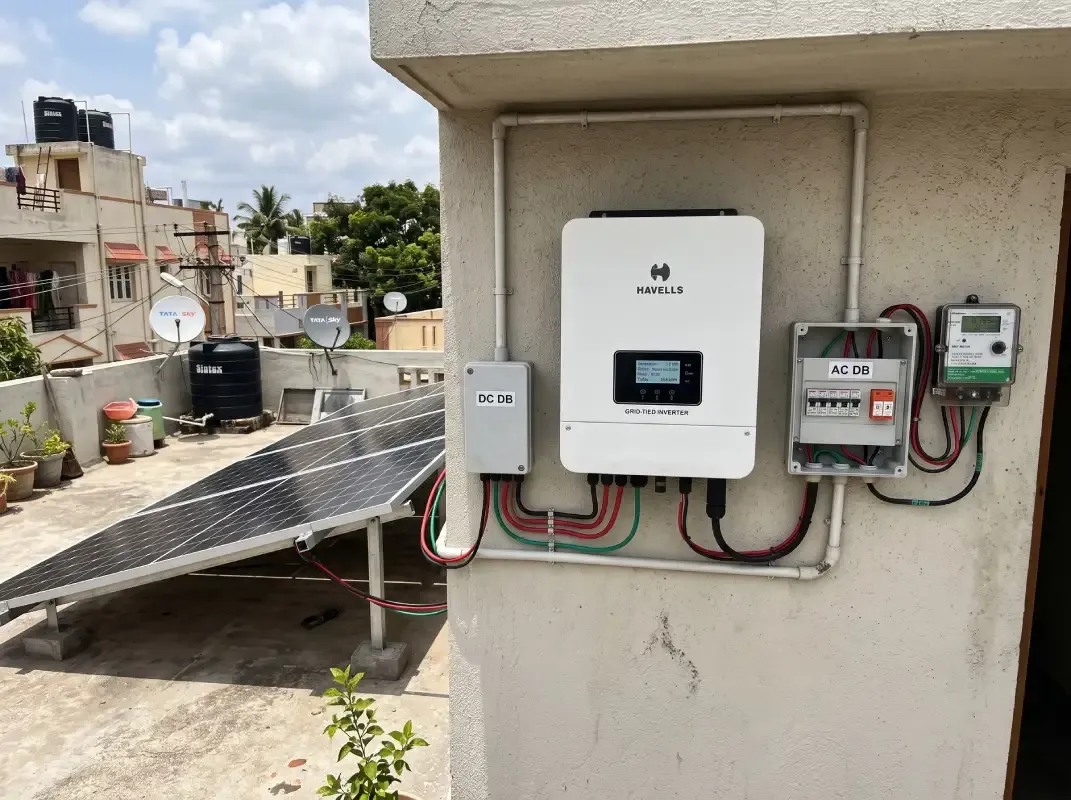
What Does a Solar Inverter Do?
Solar photovoltaic modules produce Direct Current (DC), while household appliances and the APDCL electricity grid operate on Alternating Current (AC). The inverter bridges this gap with high-efficiency solid-state power electronics, matching frequency (50 Hz in India) and voltage (230V single-phase / 415V three-phase). Modern smart inverters also feature Wi-Fi monitoring and real-time fault detection.
Comparison of Inverter Types
| Type | Grid Connection | Power Backup | Best Suited For |
|---|---|---|---|
| On-Grid (String) | Yes (APDCL Net Meter) | No (Grid dependent) | Urban homes seeking 100% bill offset & PM Surya Ghar subsidy |
| Hybrid Inverter | Yes (Grid + Battery) | Yes (Seamless UPS) | Homes & businesses requiring 24/7 backup during outages |
| Off-Grid Inverter | No (Standalone) | Yes (Heavy Battery) | Remote areas, tea estates & locations without grid power |
Why MPPT Technology Is Superior
Maximum Power Point Tracking (MPPT) uses microprocessors to constantly scan the current-voltage (I-V) curve of solar panels. When clouds pass or temperatures fluctuate in Assam, MPPT automatically recalculates the optimal operating point to harvest up to 25–30% more energy compared to older PWM designs. Explore our approved models on the solar inverters page.
Solar calculator
Estimate your system size and savings.
Use our calculators to estimate the system you need from your monthly bill, your generation, savings and payback period. Results are labelled estimates with their assumptions.
- System size calculator
- Savings calculator
- Generation calculator
- Payback calculator
- Panel area calculator
Related pages
FAQ
Common questions
What does a solar inverter do in a rooftop system?
Solar panels produce Direct Current (DC) electricity, while home appliances and the APDCL grid operate on Alternating Current (AC). The inverter converts DC to AC and synchronizes frequency and voltage with the grid.
What is the difference between MPPT and PWM inverters?
MPPT (Maximum Power Point Tracking) continuously tracks optimal voltage to extract up to 30% more energy during cloudy or changing weather. PWM is an older, less efficient method. All modern grid-tied systems use MPPT.
Which solar inverter is right for my home in Assam?
For grid-connected homes with net metering, a string on-grid inverter is most cost-effective. If your area experiences frequent power cuts, a hybrid inverter with lithium battery storage provides uninterrupted backup.
What protections should a quality solar inverter have?
Key protections include Anti-Islanding safety (auto-cutoff during grid outage), IP65 ingress protection for humid outdoor weather, Type II Surge Protection Devices (SPD), and over-voltage/over-temperature auto-shutdown.
Ask about inverter selection
Share a few details and our team will help you size the right system. No obligation.
Sewaro Energy service information
Tell us about your roof and electricity use. We'll recommend the right system and handle subsidy and net-metering paperwork where applicable.
Ready to power your home with solar? engineered to last.
Tell us about your roof and your electricity bill. We'll help you size the right system and handle the subsidy and net-metering paperwork.